
Why Retention Pond Design Fails in Middle Tennessee: Clay Siltation & Stormwater Grading Rules
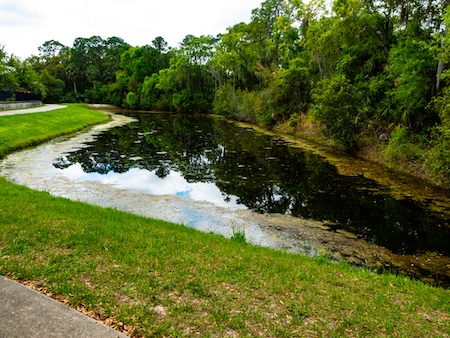
Homeowners across Nashville, TN search for retention pond installation that actually works in our red clay. Too many basins silt in or blow out after spring storms because the design ignores how Middle Tennessee soils move under load and water. The fix starts with a plan that pairs sound grading, tight excavation sequencing, and early stabilization around structures. If you are troubleshooting an existing pond or planning a new one, see how professional retention pond maintenance aligns with long-term performance.
The Real Reason Ponds Fail In Nashville Clay
Our subsurface red clay swells when wet and shrinks when dry. During a storm, fast inflow carries fine clay into the basin, which settles as heavy silt that reduces storage. When the next big cell hits, water rides higher and faster along the banks.
Without firm compaction and stable side slopes, saturated clay shears and slides, creating ruts and head cuts around inlets and outlets. Add a poorly armored culvert and you get concentrated jetting that tears a groove through the bank. Ignoring the soil is the same as ignoring the structure.
Stormwater Grading Rules That Actually Matter
Every site is different, but a few principles hold true here. Water needs a smooth path in, protected storage in the middle, and a safe, armored path out. That means grading for positive drainage to inlets, shaping a stable basin floor, and building a controlled overflow with energy dissipation. The goal is to pass routine rain without erosion and handle larger events without failure.
- Shape predictable flow to each inlet so water does not cut its own path across the bank.
- Compact clay lifts evenly so the basin shell acts like a uniform body, not loose fill.
- Build the primary outlet and emergency relief so neither becomes an unplanned waterfall.
Do not rely on landscape contouring alone to “fix” runoff. Decorative grading is not structural grading, and it will not hold during a Middle Tennessee downpour.
The Right Excavation Sequencing For Middle Tennessee
In Nashville, the order of operations is as important as the design. A proper sequence manages moisture, compacts clay at the right water content, and locks down vulnerable edges before the first storm hits.
Here is a high-level, contractor-led sequence that keeps clay where it belongs:
- Excavate and stage suitable clay, keeping it out of standing water so moisture stays workable.
- Cut and bench banks per plan so every lift can be compacted, tested, and bonded to the next.
- Install the inlet and outlet structures on schedule, not “later,” so flows have a safe path.
- Armor culvert aprons and spillways immediately to stop jetting and undercutting.
If your site includes utility crossings, narrow access, or shallow rock, coordinating crews is critical. Tighter sites around East Nashville or Donelson benefit from one accountable team that handles the dirt work and structural features together. To see how heavy equipment support fits in, explore our excavation services for complex sites and drainage projects.
Riprap Around Culverts: Why “Later” Turns Into “Never”
Outlet culverts move water faster than the surrounding soil can resist. Unarmored edges crumble quickly in clay. The only reliable fix is to place riprap and bedding rock around the structure as soon as it goes in. That rock breaks up velocity and spreads energy so the bank stays put. Waiting to add riprap invites the first storm to do the grading for you, and the results are never pretty.
Local insight: Nashville’s biggest retention pond failures show up right after a string of spring storms when banks are soft and outlets are unfinished. Sequencing the outlet and riprap before final shaping helps keep fresh clay from washing back into the bowl.
What Proper Retention Pond Installation Includes In Nashville
Good ponds in Middle Tennessee share a few traits. They respect the soil, control velocity, and make maintenance simple. That starts with tested compaction, a stable inlet and outlet, and safe access for inspection and cleanout.
Look for these elements in a professional build:
- Engineer-directed side slopes and benching that compact well in local clay.
- Geotextile and properly sized stone where soil meets moving water, especially at culverts and spillways.
- Outlet structure set to the design elevation with a rock apron that prevents scour.
- Cleanout access so sediment can be removed on a calm, dry window without tearing up the banks.
Many failures start as small rills near the concrete. Once water sneaks behind an outlet headwall, it undercuts quickly. Stabilize those joints early and verify they stay tight through the first few storms.
Maintenance Habits That Prevent Rebuilds
A well-built basin still needs attention. After big rain, pros check for fresh ruts, slumps, or scour and remove debris that could block inlets. Sediment loads vary by the season and by what is upstream. If your lot is being cleared nearby, expect more silt until vegetation is established.
Clay-related washouts are not limited to ponds. They show up on driveways and ditches too. For a closer look at how red clay behaves during heavy runoff, read our take on gravel driveway washouts on clay soils and the grading practices that keep material in place.
For properties in Bellevue, Antioch, Hermitage, and Goodlettsville, slopes and tight access often limit where equipment can sit during service. Scheduling maintenance soon after a dry spell helps crews work the banks without rutting the surface or pushing fines back into the water.
Neighborhood Conditions That Change The Plan
Across Davidson County, each area has its own twist. In Bellevue and Pegram you may fight hillside velocity. In Donelson or Madison the flatter grade can collect water along the edges. Brentwood and Nolensville often mix shallow rock with clay, which changes how lifts are compacted and how the outlet apron is keyed in. A one-size plan does not work here.
If you are comparing options, make sure any scope you review explains the basin slopes, the outlet details, and the timing for riprap placement. Ask how the crew will stage material and move equipment without tracking mud into neighboring streets. That alone can decide how smooth the project goes.
You can also learn more about retention pond installation in Nashville, TN by browsing our site and recent projects. Seeing results in settings like Hermitage or Mt. Juliet makes it easier to picture what will work on your own land.
Why Nashville Land Management Services Handles Clay Basins Differently
Nashville Land Management Services is a veteran-owned, start-to-finish land clearing and site team that understands Middle Tennessee soils. We treat the pond as a structure, not a landscaping feature. Our crews compact clay in measured lifts, set the outlet on schedule, and lock it in with the right rock so early storms do not undo the work.
We also coordinate the sequence across clearing, digging, and stabilization so you are not stuck waiting for the next trade to show up. That saves return trips and keeps banks intact. When you want a single accountable partner for basin prep, inlets, and outlet armor, we bring the people and the iron to do it right.
Your Next Step
Ready to stop patching and start preventing? Talk with a Nashville specialist who understands local clay, stormwater grading, and the excavation sequence that keeps banks together. See how professional retention pond maintenance folds into a long-term plan for your property. Call 615-703-0511 and we will schedule a site walk that fits your build timeline.
Bottom line: a stable basin in Middle Tennessee is built on sequencing, not guesswork. When the next storm rolls through, you will be glad the outlet was armored and the banks were compacted the right way from the start.
Hire the Nashville Land Clearing Pros for Your Next Project!