
Gravel Driveway Repair in Franklin TN: Fixing Ruts After Heavy Spring Rains
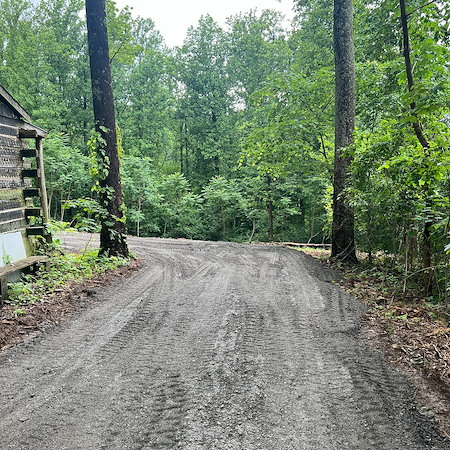
Heavy spring downpours in Franklin, TN turn shallow dips into deep ruts fast, especially where water runs across hard-packed red clay. If you are tired of tossing new rock into the same low spots, you are not alone. Real results come from professional grading, crown restoration to about 2–3 percent, and the right stone that locks into the native soil. This guide explains how Nashville Land Management Services approaches durable gravel driveway repair in Middle Tennessee and why our gravel driveway repair process holds up when quick fixes fail.
Why Ruts Form On Franklin Driveways
Franklin’s rolling hills and the Harpeth River valley create natural channels that push stormwater downhill. When that runoff hits a driveway built on compacted red clay, it tends to pool instead of soaking in. The water then follows the path of least resistance down the tire tracks. Each storm steals a little more gravel and leaves the clay base exposed.
Simply dumping new rock into those channels does not solve the root problem. The water will ride the same path again. Without proper pitch and binding material, fresh gravel becomes loose marbles that wash away with the next storm.
The Fix: Restore Crown, Rebuild The Base, Choose Better Stone
Our crews look at every driveway as a small road. Water management comes first. We shape the surface so water sheds to the sides rather than running down the middle. Then we stabilize the travel lanes with a compactable blend that ties into the red clay below.
- Restore a true 2–3% crown from the centerline to the edges so water moves off the surface quickly.
- Recondition the top few inches of the base where the clay has been pumped up into the gravel mix.
- Install and compact crushed limestone, such as dense grade aggregate, that interlocks and resists movement.
Skipping any of these steps leads to short-term results. A smooth surface is not enough if the profile is flat and the stone will not bind.
What “2–3% Crown” Looks Like In Real Life
Homeowners often ask what a 2–3 percent crown really means. On a typical 12-foot-wide driveway, the center should sit roughly 1.5 to 2.0 inches higher than each edge. That gentle rise is barely noticeable when you walk it, but it is powerful. It pushes water to the shoulders where it can drain into grass or a shallow swale instead of carving ruts down the middle.
A restored 2–3% crown is non-negotiable in neighborhoods like Westhaven and Fieldstone Farms where spring storms roll in hard. On hills around Cool Springs and Leiper’s Fork, keeping that crown is the difference between a firm surface and a washboard after every downpour.
Why We Prefer Dense Grade Limestone On Red Clay
Middle Tennessee’s native clay is slick when wet and rock-hard when dry. We use crushed limestone blends with fines, often called dense grade aggregate, because the angular stones lock together while the fines fill voids and grip the clay base. That creates a tight, durable surface that compacts well and stands up to SUVs, delivery vans, and horse trailers.
Rounded pea gravel or river rock may look tidy at first, but it will not interlock. That stone tends to roll, migrate to the sides, and leave the centerline thin. Well-graded, crushed limestone binds to the clay and stays put.
Local tip: After a wet spring in Williamson County, traffic patterns change. Mail trucks and rideshares often track water down the same line. Scheduling a professional regrade before summer heat sets the crown while moisture helps compaction, which improves long-term stability.
How Professional Reconditioning Solves Persistent Problems
Addressing Rut Memory
Old ruts have a memory. If we only fill them, water will still see the groove and follow it. Our team scarifies the travel lanes to blend old and new material, then reshapes the crown before compacting. This eliminates the hidden channels that trigger repeat washouts.
Stabilizing Soft Spots
In low areas near creeks or swales, the subgrade can pump fine clay into your stone during storms. We rebuild those sections with crushed limestone blends that include fines, then compact in thin lifts. On steeper drives, we may recommend tying the driveway profile into light side ditches so runoff exits sooner.
Improving Flow At Entries And Turns
Many Franklin driveways flatten out near the road or garage, which creates puddles. Our grading plan carries the crown through those transitions. At curves, we fine-tune the profile so water does not cross the travel lane and cut a new rut on the inside edge.
Signs Your Driveway Needs More Than “Just More Rock”
- Ruts reappear within days after a load of gravel.
- Water follows the tire tracks instead of breaking to the sides.
- Clay shows through on the centerline or at the bottom of the hill.
- Loose, round stone collects in piles along the edges.
- New washboards form at stop-and-go areas near gates or garages.
If you are nodding at two or more of these, it is time for a professional regrade. Learn how our gravel driveway repair service tackles these problems for Franklin homeowners before they turn into bigger drainage issues.
Franklin-Specific Challenges And How We Plan For Them
Rolling Terrain And Cross-Slope
From Carter’s Creek to the hills west of Highway 96, side slopes push water across driveways at an angle. We set the crown to fight that cross-slope, keeping flow off the tire paths and toward the shoulder. This reduces the sideways scouring you see after those sudden afternoon storms in April and May.
Hard-Packed Red Clay Base
Red clay can glaze over like brick when compacted and dried. That is why material choice matters. Crushed limestone with fines keys into that surface so the top course acts like a protective skin. The goal is a tight, smooth surface that still sheds water without letting the base rise into the gravel.
High-Traffic Lanes And Delivery Patterns
Busy driveways serving barns, accessory dwellings, or side garages see more turning and braking. We adjust the blend and compaction in those zones so the surface resists shoving and rutting. That means fewer callbacks and a driveway that stays even through summer and fall.
What To Expect When You Call Nashville Land Management Services
Our team starts with a site walk to study slope, soils, and where water is coming from. We explain a clear plan that restores crown and rebuilds the travel lanes with dense grade limestone. The result is a smooth, compacted surface that drains correctly and looks clean. Many Franklin clients tell us their drives finally stay in shape between storms.
Some properties also benefit from broader site improvements. If brush is choking shoulders or blocking drainage, our land clearing crews can open up edges so water has a place to go and sunlight can dry the surface faster.
Middle Tennessee Keywords You May Hear From Us
When our project manager walks your site, you might hear phrases like “2–3 percent crown,” “dense grade aggregate,” or “reconditioning the travel lanes.” We avoid jargon, but these terms matter. They describe a process built for Middle Tennessee weather and soils, not a one-size-fits-all patch.
If you want to read more about gravel driveway repair in Franklin, TN as a whole and how it ties into full site prep, start at our gravel driveway repair in Franklin, TN hub and explore services that keep your property access reliable year-round.
Seasonal Timing And Durability
Spring brings the biggest washouts. Early summer is ideal for shaping because recent moisture helps compaction and warm days cure the new surface. Fall touch-ups keep the crown healthy before winter rains. With a stable profile and the right limestone blend, your driveway can go season to season with only light maintenance from our team.
Ready For A Driveway That Sheds Water And Stays Smooth
You do not have to live with ruts every time a thunderstorm hits Franklin. The combination of proper grading, a restored 2–3% crown, and crushed limestone that locks into red clay will stop the cycle of quick fixes. Call Nashville Land Management Services at 615-703-0511 to talk through your driveway and get a plan that fits your property.
When you are ready to move forward, our crew will schedule work around the weather and your access needs. We keep you informed from the first site walk to the final compaction pass, then review the results on foot before we leave. That is how we build long-term results and happy clients across Franklin and the surrounding communities.
Get Started Today
Let us fix the root problems, not just the symptoms. Reach out to Nashville Land Management Services for a plan that restores shape, improves drainage, and stands up to the next round of storms. You can start right here on our service page for gravel driveway repair or call us at 615-703-0511 to speak with a specialist.
Hire the Nashville Land Clearing Pros for Your Next Project!